Overview
Max Elevation
5,545m
Duration
17 Days
Difficulty
Grade III
Price
Accommodation
Teahouses
Group Size
2-12 People
Fixed Departures
4th – 20th December 2026
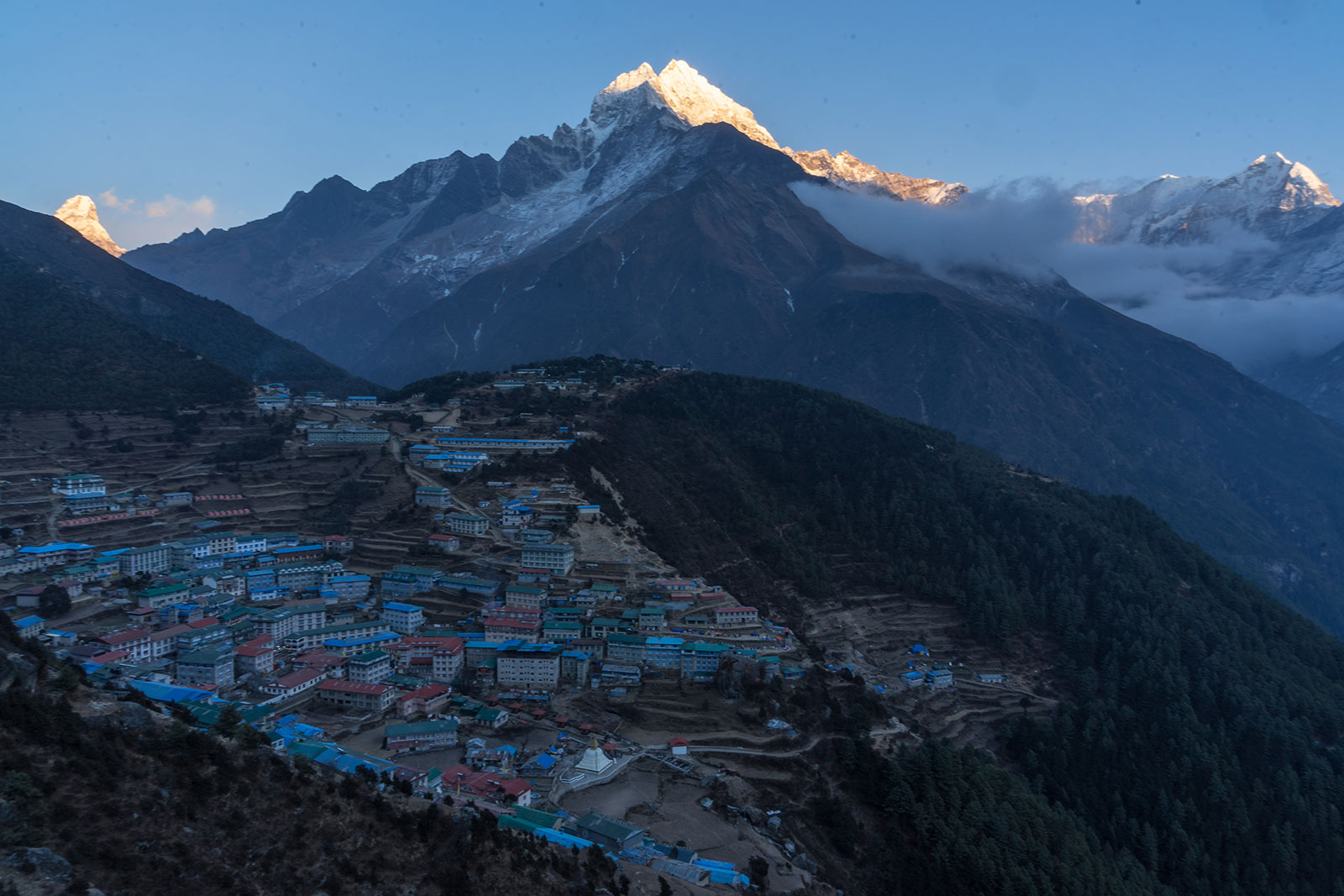
What is the Everest Base Camp Trek?
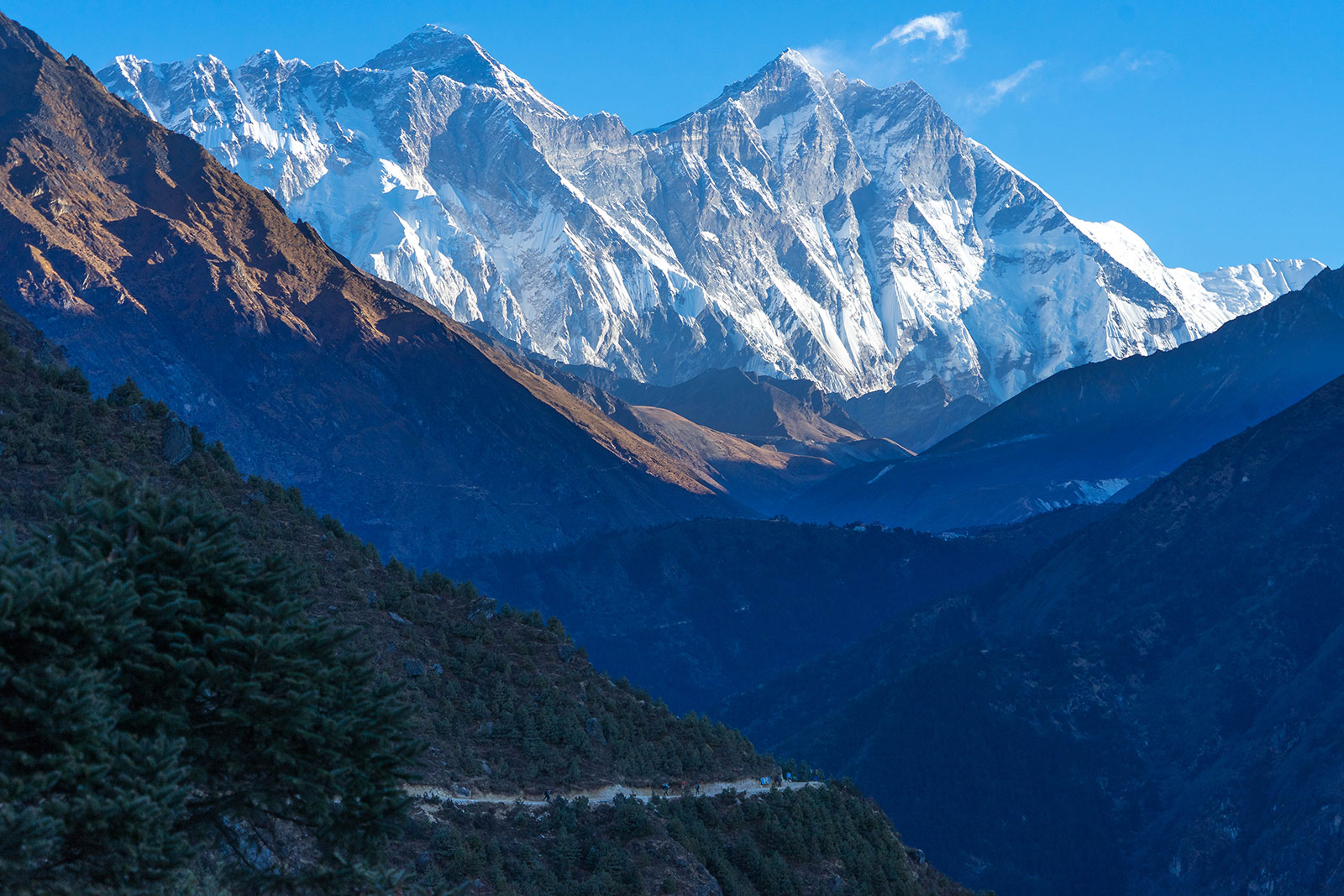
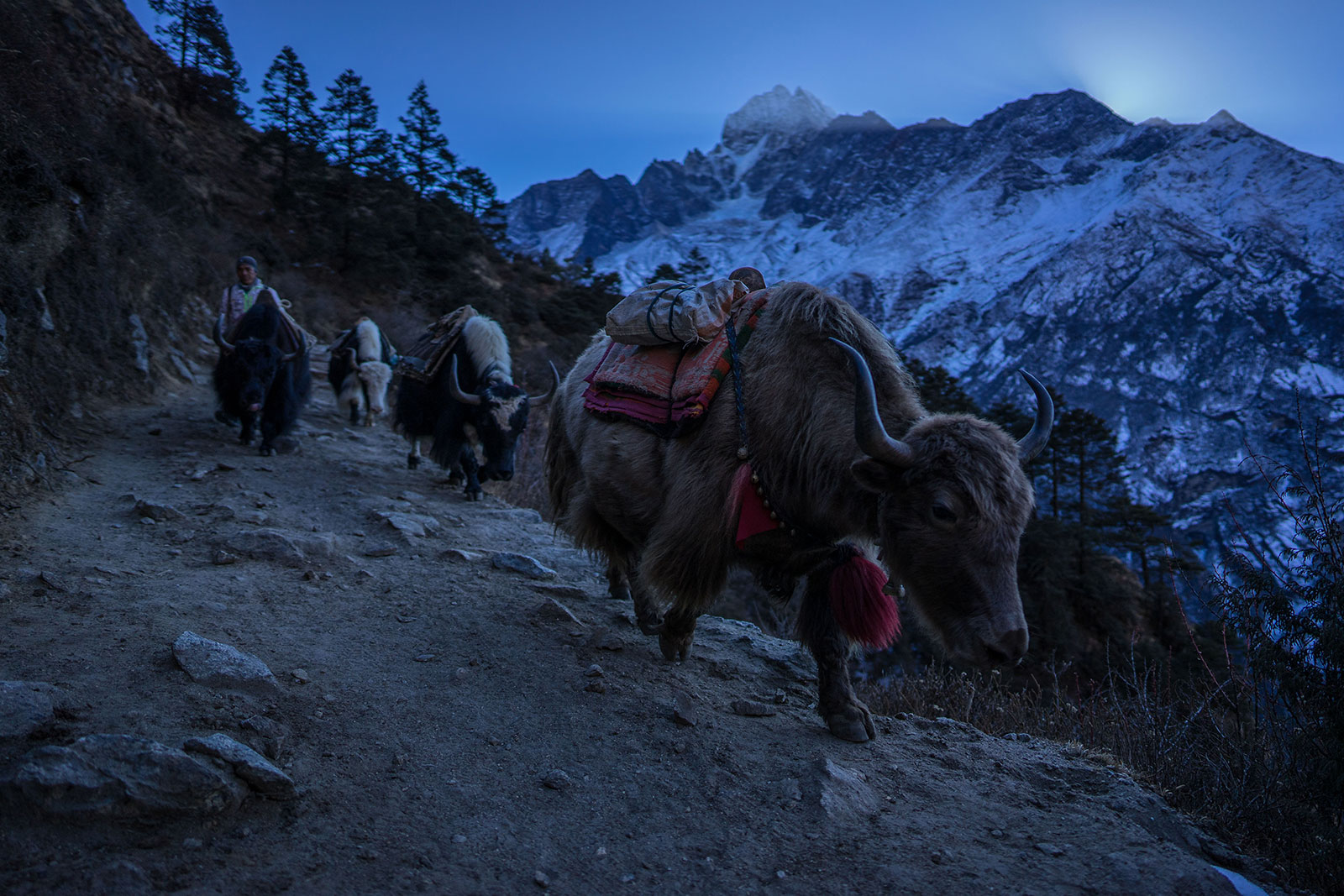
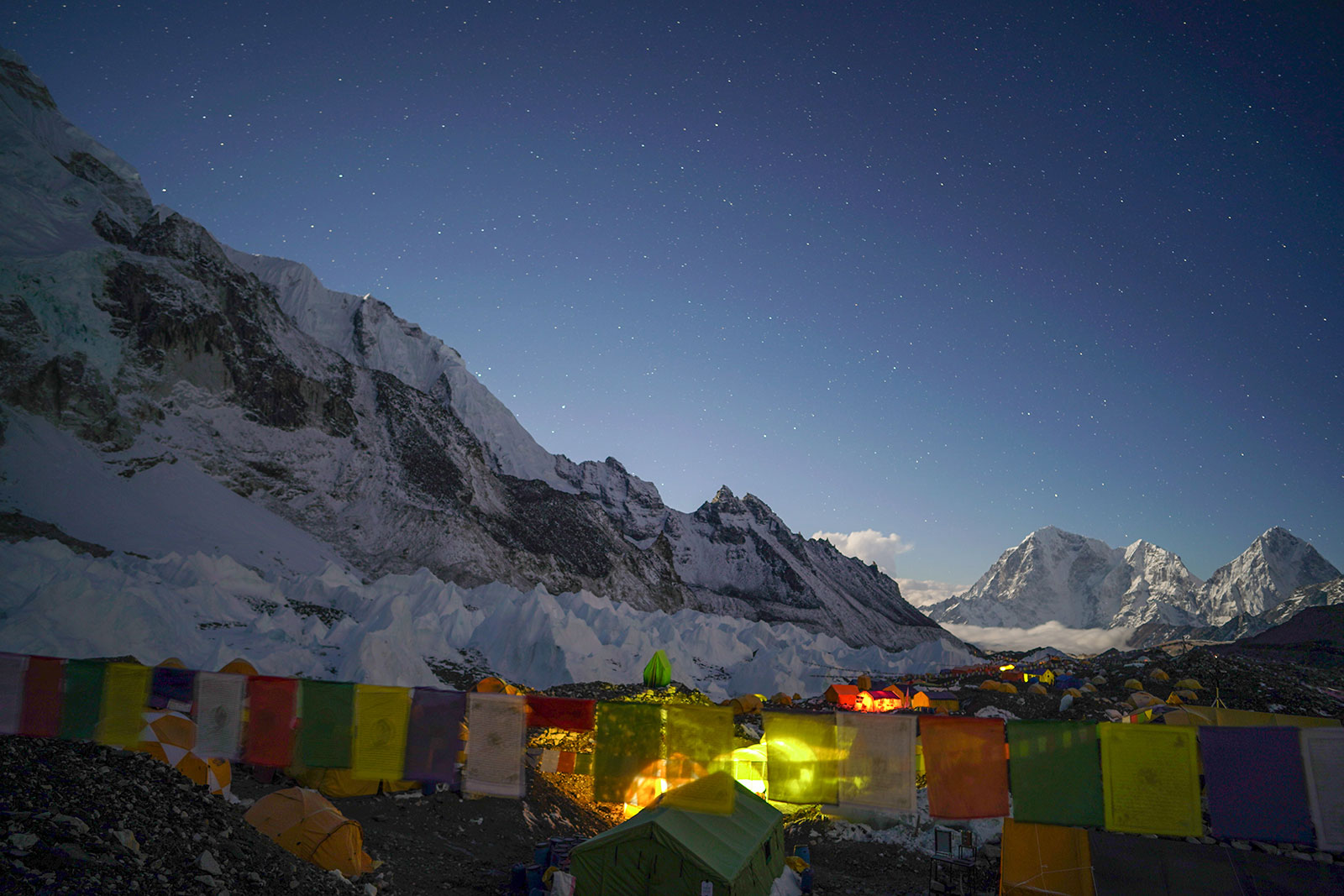
The Everest Base Camp Trek is the definitive Himalayan journey; a gradual immersion from the energy of Kathmandu into the vast, glacial heart of the Khumbu. This fully supported trek follows ancient trade routes and Sherpa villages, winding beneath fluttering prayer flags, alongside roaring rivers and through high alpine landscapes where the scale of the mountains quietly redefines perspective. Each day builds carefully towards the ultimate reward: standing at the foot of the world’s highest mountain and watching first light ignite Everest, Lhotse and Nuptse from Kalapathar. Along the way, the resilience, warmth and spiritual depth of the Sherpa people give this journey a human soul that matches its epic scenery.
Price Information
Itinerary
Day 1: Arrival, informal welcome dinner
Arrive at Tribhuvan International Airport, Kathmandu, where a member of our team will meet you and transfer you to your hotel. After settling in, the rest of the day is at leisure to relax, recover from your journey, and prepare for the trek ahead. Join us later for an informal dinner. Overnight in Kathmandu.
Meals included: (B)
Day 2: Trek briefing & walk through Asan Bazaar, & visit UNESCO World Heritage Sites, Kathmandu Durbar Square & Swayambhunath Stupa
Today you will start the day with a full briefing about the trek. After any last-minute shopping, and lunch we will walk through Thamel, the tourist area of Kathmandu and on through Asan Bazaar, then Kathmandu Durbar Square before heading to Swayambhunath Stupa to walk a kora with local pilgrims as they perform their early evening prayers.
Asan is the historical, cultural, and commercial centre of Kathmandu and where you are able to experience the real everyday life of Kathmanduites as they shop and go about their daily lives. This ancient bazaar has a myriad of alleyways interspersed with temples and monasteries and is the heart of the Kathmandu Newar community. The bustling, narrow streets are filled with tiny shops selling everything from spices, to kitchenware, hardware, plants, seeds, clothes, vegetables, meat, dried beans, fish, homemade pickle, delicious snacks, festival essentials and much, much more. A wander through these ancient streets is always a feast for the eyes and senses. We will arrive in Kathmandu Durbar Square, a dense cluster of old palaces, courtyards and beautifully carved temples that once hosted royal ceremonies and daily life in the old kingdom. Hanuman Dhoka Palace, the Kumari Ghar and a mix of pagoda-style shrines keep the square buzzing with heritage, worship and movement.
Swayambhunath or the Monkey Temple, is one of Nepal’s most iconic and easily recognised temples with its fluttering prayer flags and unforgettable eyes of wisdom painted high on the central stupa. Sat majestically on top of a hill to the west of the city, this ancient and beautiful Buddhist temple sees a constant stream of locals and pilgrims walking in a clockwise kora and climbing the steps to worship at the many shrines surrounding the great stupa. From its hilltop location, Swayambhunath also offers some of the finest views across Kathmandu and the valley. Overnight in Kathmandu.
Meals included: (B)
Day 3: Fly to Lukla (2,886m) and trek to Phakding (8km, 2,640m, c.3-4 hours)
It will be a very early start as you head to Manthali Airport in the early hours of the morning (c.4-5 hr drive) in readiness for your flight to Lukla, the gateway to the Everest region. Your trek to Phakding starts directly from the airport and will take three to four hours. You will trek along a pleasant trail gently descending to the river, with a steep climb from Tarhe Khola where you have a superb view of the Kusum-Kangru (6,369m). After another short climb, you reach Ghat village and after another 1 ½ hrs of trekking you arrive at Phakding village. Overnight in Phakding.
Please note: Direct flights between Kathmandu and Lukla may be available depending on the season, weather conditions and airport traffic. During peak periods, flights are often routed through Manthali Airport to avoid heavy congestion and long delays at Kathmandu Airport. This routing ensures smoother operations and reduces the risk of extended wait times for travellers.
Meals included: (B, L, D)
Day 4: Trek Phakding – Namche Bazaar (10-12km, 3,440m, c.5-6 hours)
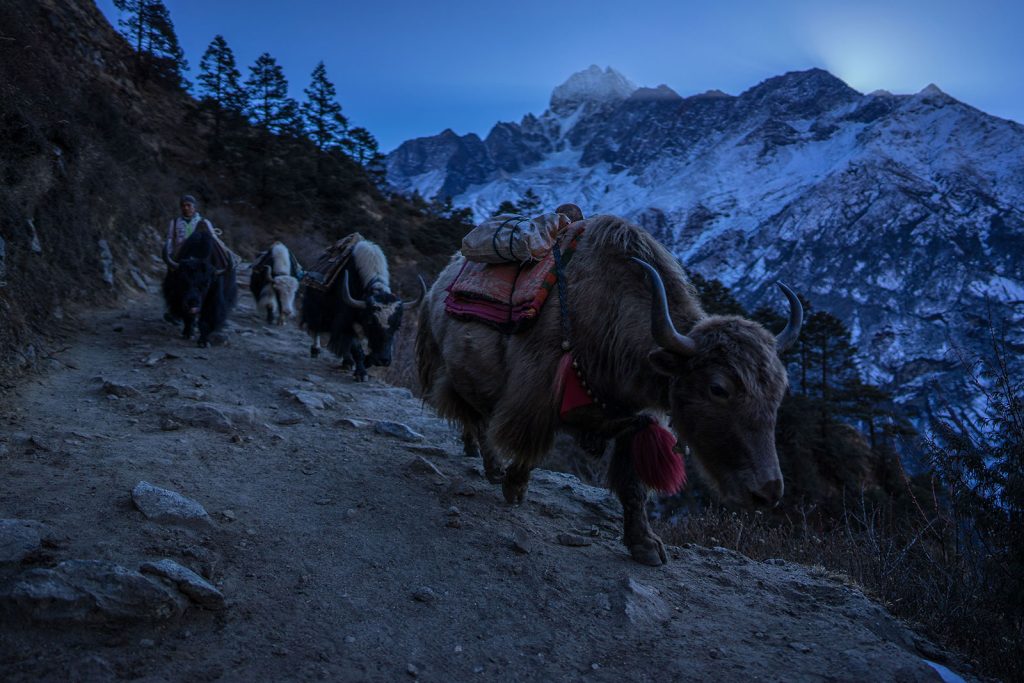
After crossing a suspension bridge over the Dudh Kosi River, the walk is pleasant with a few short uphill climbs and some downhill, with magnificent views of Thamserku (6,808m). From the village of Benkar, you will cross a long suspension bridge over the Dudh Koshi River once more, and then continue on this trail of trekkers, dzo (mix of yak and cow) and porters, before finally arriving at the small village of Monjo.
Monjo is situated below the magnificent peak of Thamserku and near to the entrance to the Sagarmatha National Park. After a few minutes’ walk from Monjo, you will enter the Sagarmatha National Park, where your trekking permit is checked. From here there is a short descent to Jorsalle village, the last village before Namche Bazaar. You will continue to trek by the river until the last bridge over the Imja is reached. From here the walk is along a winding uphill path all the way to Namche Bazaar, with views of Kwangde Peak and its sister peaks to the east, with Kusum Kangru behind you as you climb higher. There are also views of the Mt. Everest, Nuptse Wall, Lhotse and a closer view of Taweche Peak, which can be seen all the way up to Thop Danda, where there’s a resting stonewall for porters and trekkers alike. From here, there is still another 1-2 hour walk, which brings you to the famed Namche Bazaar, with its colourful houses situated in an amphitheatre shaped bowl.
Namche Bazaar is the main trading village in the Khumbu region and holds a busy Saturday market. It is also a meeting place for Hindu traders from the lowlands and the Tibetan yak caravans that have reached the town by crossing the glaciated Nangpa La. Overnight in Namche Bazaar.
Meals included: (B, L, D)
Day 5: Acclimatisation hike to the Everest View Hotel
Namche is tucked away between two ridges amidst the giant peaks of the Khumbu and has an abundance of lodges, tea shops and souvenir shops, as well as a magnificent outlook. It is an ideal place to spend a rest day for acclimatisation to the high altitude before heading off towards Tengboche. As part of your acclimatisation process, you will undertake a morning hike, in order to follow the rule of walk high, sleep low. You will head to Syangboche (3,800m) where the Everest View Hotel is situated offering (subject to weather) outstanding views of Everest, Nuptse, Lhotse, Ama Dablam, Thamserku and Kusum Kangaru. From here you return to Namche for lunch and you are at leisure to spend the afternoon as you wish.
For those of you with sufficient energy, you may wish to undertake the short, uphill walk to the Sagarmatha National Park headquarters, a magnificent spot perched on top of Namche Bazaar with spectacular views of the surrounding snow-capped giants and the valleys way down below. There is also an interesting museum with all kinds of information regarding the history of the Himalayas, its geography, culture, mountaineering history and information on flora and fauna of this region. Overnight in Namche Bazaar.
Meals included: (B, L, D)
Day 6: Trek Namche Bazaar – Tengboche (3,870m, c.5–6 hours)
The trail contours high above the Dudh Kosi, offering classic Himalayan views before descending steeply to Phunki Tenga. After lunch, a sustained climb through rhododendron and fir forest leads to Tengboche. The monastery here is the spiritual heart of the Khumbu, set against an unforgettable backdrop of Ama Dablam, Everest, Nuptse and Lhotse. Overnight in Tengboche.
Meals included: (B, L, D)
Day 7: Trek Tengboche – Dingboche (4,410m, c.5–6 hours)
Descending through forest to Deboche, the trail crosses the Imjatse River and climbs gradually through Pangboche and Shomare, with increasingly close views of Ama Dablam. Turning east beneath its north face, you enter the Imjatse Valley, where the landscape opens wide beneath Lhotse and Nuptse. Dingboche is a patchwork of stone-walled fields and traditional lodges. Overnight in Dingboche.
Meals included: (B, L, D)
Day 8: Acclimatisation day and local hike in Dingboche
Today is your final acclimatisation day. Options include a challenging hike up Nangkartshang Peak (5,083m) for sweeping views of Makalu, Lhotse, Island Peak and Ama Dablam, or a gentler walk up the Imja Valley to Chhukung (4,730m). The afternoon is for rest and recovery. Overnight in Dingboche.
Meals included: (B, L, D)
Day 9: Trek Dingboche – Lobuche (4,910m, c.6 hours)
Heading north, the trail passes memorials and open alpine terrain with views of Tawache, Ama Dablam and the Nuptse wall. After lunch at Thukla, a steep climb leads to the climbers’ memorials at Dongla Pass (4,620m), a poignant reminder of the risks of high-altitude mountaineering. From here, the path follows the Khumbu Glacier to Lobuche. Overnight in Lobuche.
Meals included: (B, L, D)
Day 10: Trek Lobuche to Everest Base Camp (5,364 m) via Gorakshep - back to Gorakshep (5,170 m) (c.8-9hrs, 15km)
An early start takes you past the Khumbu Glacier toward Everest Base Camp. The trail winds over rocky moraines and frozen streams, offering ever-changing views of Pumori, Nuptse, and the Khumbu Icefall. Arriving at Base Camp, you’ll witness climbers’ tents dotting the glacier, the icefall groaning and shifting in the shadow of Everest. After soaking in the scale and drama of the world’s tallest mountain, the trek descends back to Gorakshep for an overnight stay, with stunning views of the surrounding peaks as the sun sets. Overnight in Gorakshep.
Meals included: (B, L, D)
Day 11: Sunrise hike to Kalapathar (5,545m) and trek to Pheriche (4,243m, c.9–10 hours)
A dawn start leads you up the iconic ridge path to Kala Patthar, the classic viewpoint for Everest. The ascent is steady and exposed, with every step bringing more of the skyline into view until the entire Everest massif fills the horizon. From the summit, the morning light washes over Nuptse, Lhotse and Everest in a way that feels genuinely surreal. After taking it in, descend back to Gorak Shep for breakfast before retracing the route towards Pheriche, home to the Himalayan Rescue Association aid post. Overnight in Pheriche.
Meals included: (B, L, D)
Day 12: Trek Pheriche – Phortse (3,810m, c.4 hours)
Leaving Pheriche, the trail descends gently across open alpine terrain, with wide views back toward Tawache and Cholatse. As you lose altitude, the landscape begins to soften, and the path winds through scattered yak pastures and seasonal herder settlements. The route passes through Pangboche, one of the oldest Sherpa villages in the Khumbu, where stone houses cluster around ancient mani walls and chortens. Pangboche is home to the region’s oldest monastery, believed to date back to the 16th century, and is deeply rooted in Sherpa spiritual life.Phortse is a traditional Sherpa village known for producing the highest number of Everest summiteers. Less visited than neighbouring Namche and Tengboche, it retains a quieter, more authentic atmosphere, with stone-walled fields, prayer flags and a strong sense of community. Overnight in Phortse.
Meals included: (B, L, D)
Day 13: Trek Phortse – Monjo (2,835m, c.4–5 hours)
Today begins with a steep descent from Phortse through forests of rhododendron and pine, the air noticeably warmer as you continue to lose altitude. The trail crosses suspension bridges over the Dudh Koshi River and then climbs steadily to the Mongla Pass, a spectacular viewpoint with sweeping vistas of Ama Dablam, Thamserku and the distant Tengboche Monastery perched high on its ridge.From Mongla, the path contours gently downhill toward Namche Bazaar. Arriving back in this bustling Sherpa hub, you’ll stop for lunch and have time to reflect on how far the journey has taken you since your arrival days earlier. Leaving Namche, you retrace the familiar route alongside the Dudh Kosi, passing through Jorsalle and back into the Sagarmatha National Park buffer zone before reaching the riverside village of Monjo. Overnight in Monjo.
Meals included: (B, L, D)
Day 14: Trek Monjo – Lukla (13km, 2,886m, c.4–5 hours)
Today, you’ll retrace your steps along the trail back to Lukla, descending through forests, crossing familiar suspension bridges, and passing the villages that have been part of your journey. As you approach Lukla, the sense of accomplishment and awe over the landscapes you’ve traversed will be unforgettable. Once in Lukla, you can celebrate completing the trek with a hot shower and some well-deserved refreshments. Overnight will be in Lukla, before your return to Kathmandu.
Meals included: (B, L, D)
Day 15: Fly to Manthali (15-20 mins) and drive to Kathmandu (c.4-5 hours, 1,400m)
An early morning flight will take you to Manthali and then by road, onto Kathmandu. Arrive in the early afternoon, after which the rest of the day is at leisure. Relax at your hotel, explore the city, or enjoy some optional shopping or sightseeing in Kathmandu. Overnight in Kathmandu.
Please note: Direct flights between Lukla and Kathmandu may be available depending on the season, weather conditions and airport traffic. During peak periods, flights are often routed through Manthali Airport to avoid heavy congestion and long delays at Kathmandu Airport. This routing ensures smoother operations and reduces the risk of extended wait times for travellers.
Meals included: (B)
Day 16: Rest Day and tour to UNESCO World Heritage sites Boudhanath & Pashupatinath
Today will have slow morning and some free time before we will to the north east of the city for a guided tour of UNESCO World Heritage site Boudhanath and Pashupatinath.
Boudhanath is one of the most important religious and cultural centre for Nepal’s considerable Tibetan in exile population and is one of the largest Buddhist Stupas in the world. The side streets surrounding the magnificent stupa are full of maroon-robed monks, gleaming monastery roofs, stalls selling yak butter lamps, shops selling the everyday paraphernalia of Buddhist worship and the low chant of monks at prayer.Pashupatinath is not only Nepal’s most important Hindu temple but also one of the most important Shiva temples on the Indian subcontinent. It is also Kathmandu’s most important cremation site, with burning ghats lining the river bank alongside the temple. Overnight in Kathmandu.
Meals included: (B)
Day 17: Depart Nepal
Your airport transfer will take you to Tribhuvan International Airport for your onward journey, marking the end of your Himalayan adventure.
Meals included: (B)
What is included?
- Pre-trip advice and briefing
- Airport transfers for international & domestic flights
- All in country transportation in private vehicles
- 4 nights B&B hotel accommodation in KTM
- 13 nights full board accommodation in tea houses during the trek
- Meals as outlined in the itinerary B:16, L:12, D:12
- Guided tours in Kathmandu Durbar Square, Swayambhunath Stupa, Boudhanath Stupa and Pashupatinath Temple
- Duffle bags for your trekking gear for the duration of the trek
- Minimum of 1 guide with the group at all times
- Assistant guides where required (1 guide per 4 pax)
- 1 porter for every 2 pax
- Necessary permits and entrance fees
- Insurance for our staff
- Group medical kit
- Government taxes
What isn't included?
- Domestic flight ticket Kathmandu – Lukla – Kathmandu or Manthali – Lukla – Manthali (Depends on flights availability)
- International flights to and from Kathmandu
- Visas for Nepal (available on arrival)
- Insurance (insurance to include evacuation is mandatory to a maximum elevation of 5,545m, Kalaphathar)
- Meals unless specified in the itinerary
- Personal expenses to include, but not limited to beverages, alcoholic drinks, gifts, laundry, snacks throughout the trip. Hot showers and battery charging during the trek
- Sightseeing unless specified in the itinerary
- Excess luggage fee for domestic flights
- Tips
- Charges incurred as a result of delays beyond the control of Himalayan Quests
Inquire NOW to receive our full in-depth Everest Base Camp Itinerary
Simply fill out the form, and I will be in touch with the full details and next steps. If you’d like to talk things through or ask any questions, a call can easily be arrange at any point.
Frequently Asked Questions
Item #1
Lorem ipsum dolor sit amet, consectetur adipiscing elit. Ut elit tellus, luctus nec ullamcorper mattis, pulvinar dapibus leo.
Item #2
Lorem ipsum dolor sit amet, consectetur adipiscing elit. Ut elit tellus, luctus nec ullamcorper mattis, pulvinar dapibus leo.
Item #3
Lorem ipsum dolor sit amet, consectetur adipiscing elit. Ut elit tellus, luctus nec ullamcorper mattis, pulvinar dapibus leo.
You May Also Like...

Everest Base Camp